
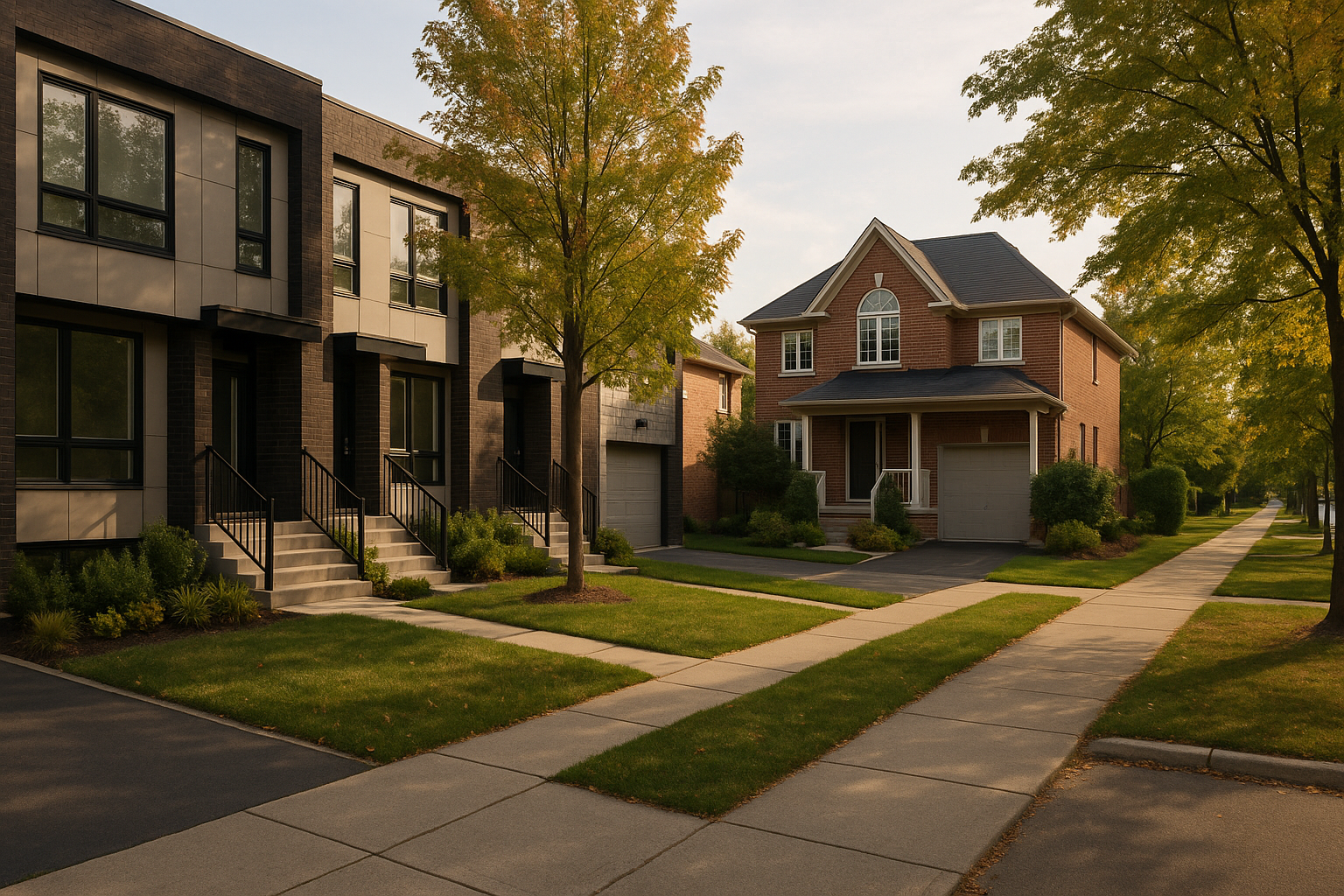
When affordability is tight, the choice between a GTA townhouse and detached home is not simply about getting more square footage. It is a decision about monthly carrying costs, usable space, maintenance, location, privacy and how much financial flexibility your household wants to preserve.
For many first-time buyers and growing families, a townhouse can provide more living space than a condominium apartment without the price of a detached home. A detached property may offer greater privacy, storage and long-term flexibility, but the higher purchase price can affect your down payment, mortgage, property taxes, maintenance budget and emergency cushion.
In general, a townhouse may be the better choice when keeping the purchase price and monthly costs manageable is the priority. A detached home may make more sense when privacy, outdoor space and future flexibility justify the additional cost without putting your household budget under excessive pressure.
GTA townhouse vs detached home: a quick decision matrix
| Consideration | Townhouse may be better when… | Detached may be better when… |
|---|---|---|
| Purchase price | You want to reduce the mortgage and cash required to buy. | You can comfortably afford the higher price without sacrificing your financial buffer. |
| Maintenance | You prefer less exterior maintenance, especially in a condo townhouse. | You want complete control over repairs, renovations and outdoor areas. |
| Space | You can work with a narrower layout, shared walls or less outdoor space. | You need more privacy, storage, parking or room for future changes. |
| Monthly carrying costs | You want to keep mortgage payments and maintenance responsibilities lower. | You can absorb higher ownership costs while retaining savings for repairs and other goals. |
| Flexibility | Your needs are relatively predictable and the layout meets them. | You may want to add living space, change the yard or make substantial renovations. |
Why townhouses are attracting affordability-focused buyers
Townhouses can occupy a useful middle ground between a condominium apartment and a detached house. They often provide multiple levels, bedrooms, outdoor space and direct access from the street while requiring less capital than a detached property in the same general area.
September 2026 GTA reporting illustrates the importance of comparing property types rather than relying only on a broad market average. TRREB reported 5,040 sales, 16,500 new listings and an average selling price of $1,006,409 for the month. The average selling price was down 5.1% year over year, while the MLS Home Price Index Composite benchmark was down 4.7%.
Those figures describe the GTA overall, not the price of a particular townhouse or detached home. A separate analysis of 21 core GTA municipalities reported approximate median sold prices of $775,000 for townhouses and $1.15 million for detached homes. That analysis used medians and a defined municipality set, so it is not directly interchangeable with TRREB’s benchmark or average-price data. Its value is in showing how materially the price gap between property types can affect a household’s budget.
Freehold townhouse vs detached GTA: do not treat all townhouses the same
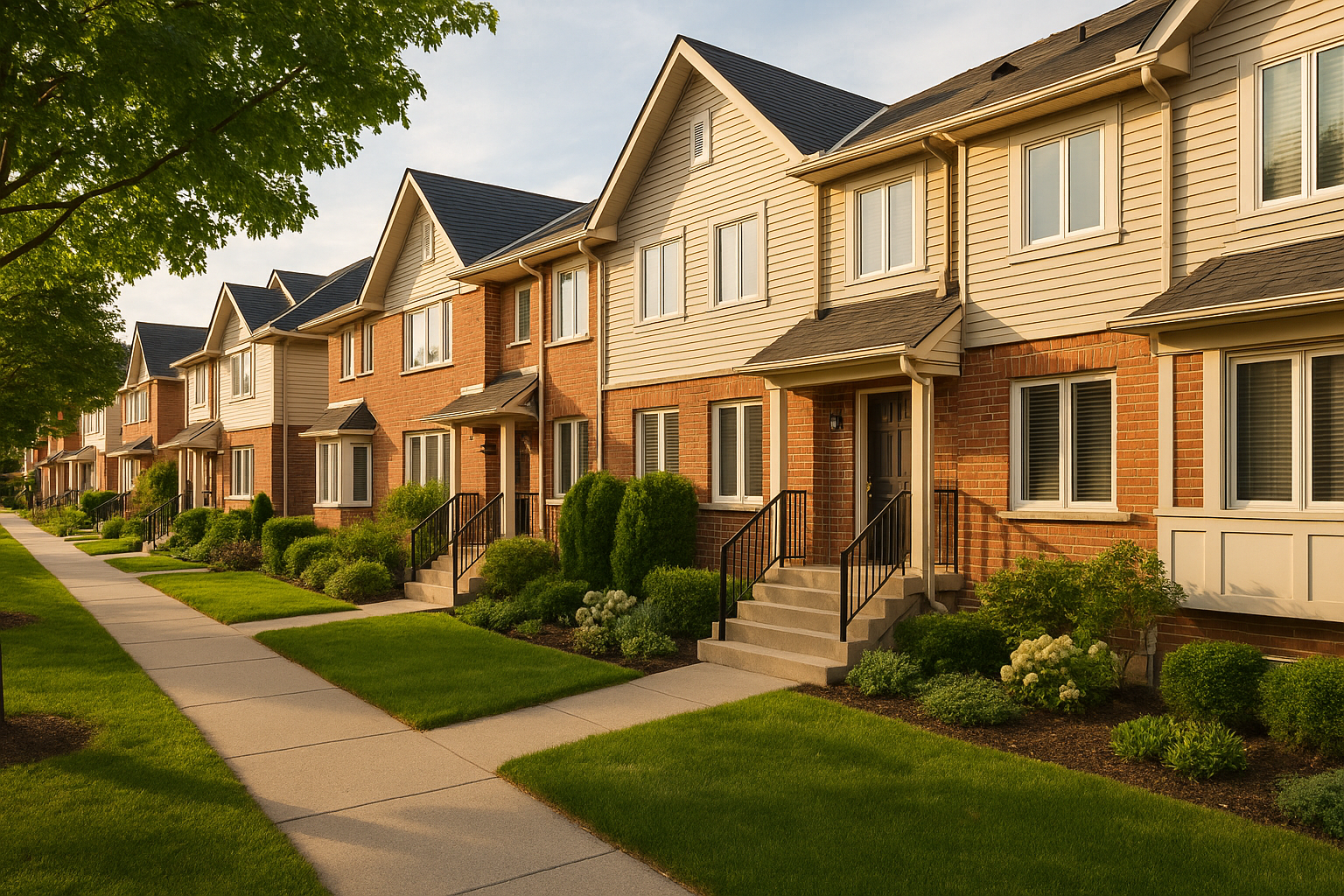
A freehold townhouse and a condo townhouse can have very different ownership experiences. With a freehold townhouse, you generally have greater responsibility for the home and lot, although some communities may have shared elements or common expenses. A condo townhouse usually involves monthly condo fees and rules covering items such as exterior maintenance, landscaping or shared facilities.
Condo fees are not automatically a disadvantage. They may cover services you would otherwise pay for yourself. However, you should review the fee history, reserve fund information, status certificate and the corporation’s rules before making an offer. A lower purchase price can be less attractive if fees are high, rising quickly or paired with significant upcoming work.
Ask specifically what is included in the fees, which parts of the property you are responsible for, whether there are restrictions on renovations and whether the corporation has a healthy reserve fund. A real estate lawyer and other qualified professionals can help you review the relevant documents.
Which option costs less to own?
A townhouse will often cost less to purchase, but the answer depends on the property and the full monthly budget. Compare more than mortgage principal and interest. Include:
- property taxes and home insurance;
- condo fees, if applicable;
- utilities and parking costs;
- routine repairs and appliance replacement;
- roof, windows, exterior and landscaping responsibilities;
- commuting, transit and vehicle costs; and
- an emergency fund for unexpected expenses.
CMHC’s 2026 Mortgage Consumer Survey found that 52% of homebuyers paid the maximum they could afford and 32% experienced unexpected buying costs. That is a useful warning against treating mortgage qualification as the same thing as financial comfort. The more expensive home is not necessarily the better choice if it leaves little room for repairs, childcare, job changes or future rate adjustments.
Down payment and financing considerations
The purchase price can change the cash required to close. Under current insured-mortgage rules, buyers generally need at least 5% down on the first $500,000 and 10% on the portion between $500,000 and $1.5 million. Mortgage loan insurance is generally required when the down payment is below 20, and insurance is not available for homes priced at $1.5 million or more.
That means the same buyer may face a substantially different down-payment and financing structure when moving from a townhouse to a detached home. Do not use every dollar available for the down payment without considering closing costs, moving expenses, immediate repairs and a cash reserve.
The Bank of Canada held its overnight target at 2.25% on September 2, 2026. This policy rate is not the same as the mortgage rate you will receive, but it is relevant context when assessing variable-rate borrowing and overall affordability. Your mortgage professional should model the specific payment scenarios that apply to your household.
Which is better for a growing family in the GTA?
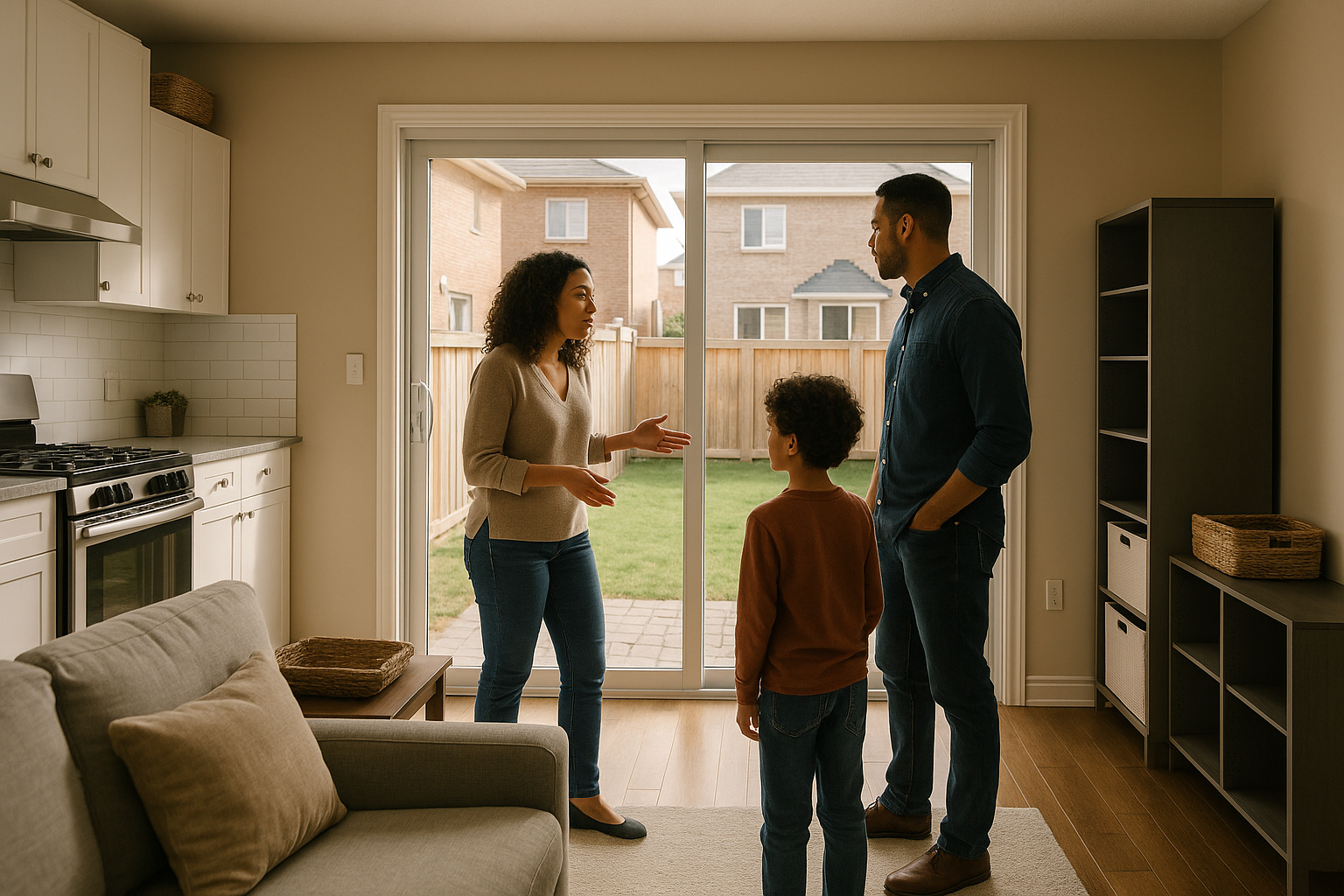
The best home type for a growing family in the GTA depends on how the household uses space. A townhouse may work well if it offers enough bedrooms, practical storage, safe outdoor access and a location close to schools, transit, childcare or work. A well-designed townhouse can be more functional than a larger home with a difficult commute or an unsustainable monthly payment.
A detached home may be preferable when the family needs a larger yard, more parking, greater separation between living areas or the ability to renovate and expand over time. It may also provide more privacy and fewer shared-wall considerations. These benefits should be weighed against higher maintenance obligations and the possibility of a larger mortgage.
Visit each property at different times of day. Check traffic, noise, parking, natural light, storage and the practical route to the places your household visits most often. A floor plan and listing description cannot answer all of those questions.
When a townhouse may be the smarter choice
- You want to keep the mortgage smaller and retain a stronger emergency fund.
- You value location and access to amenities more than a larger lot.
- You prefer some maintenance to be handled through a condo corporation.
- You can accept shared walls and a more compact layout.
- You are buying your first home and want a manageable step into ownership.
When a detached home may be worth the extra cost
- You have a stable budget that can handle higher payments and maintenance.
- Privacy, parking, storage or outdoor space are central to your lifestyle.
- You expect to stay long enough to benefit from the layout and property features.
- You want more control over renovations, landscaping and future use of the home.
- The detached option does not force you to reduce essential savings or take on excessive debt.
How to make the decision
Start with a realistic monthly budget rather than the maximum amount a lender may approve. Compare at least two or three suitable properties in the same general area and calculate the complete ownership cost for each. Then test the budget against possible changes, such as a temporary loss of income, higher renewal payments, a major repair or increased family expenses.
For eligible first-time buyers purchasing qualifying new construction, federal GST relief may apply to homes priced up to $1 million, with partial relief between $1 million and $1.5 million. Ontario has also announced intended HST relief for eligible new homes under specified agreements entered into during the applicable period. These measures apply to qualifying new homes, not every resale townhouse or detached property, so confirm eligibility, timing and documentation before relying on them.
There is no universally correct answer in the GTA townhouse vs detached home decision. The right option is the one that provides the space your household needs while leaving enough financial room to manage the less predictable costs of ownership.
If you are comparing a townhouse or detached home in Toronto or elsewhere in the GTA, Team Sapphire can help you evaluate the trade-offs by neighbourhood, property type and budget. Contact Sapphire Real Estate Inc., Brokerage, to discuss your priorities and build a focused buying plan.